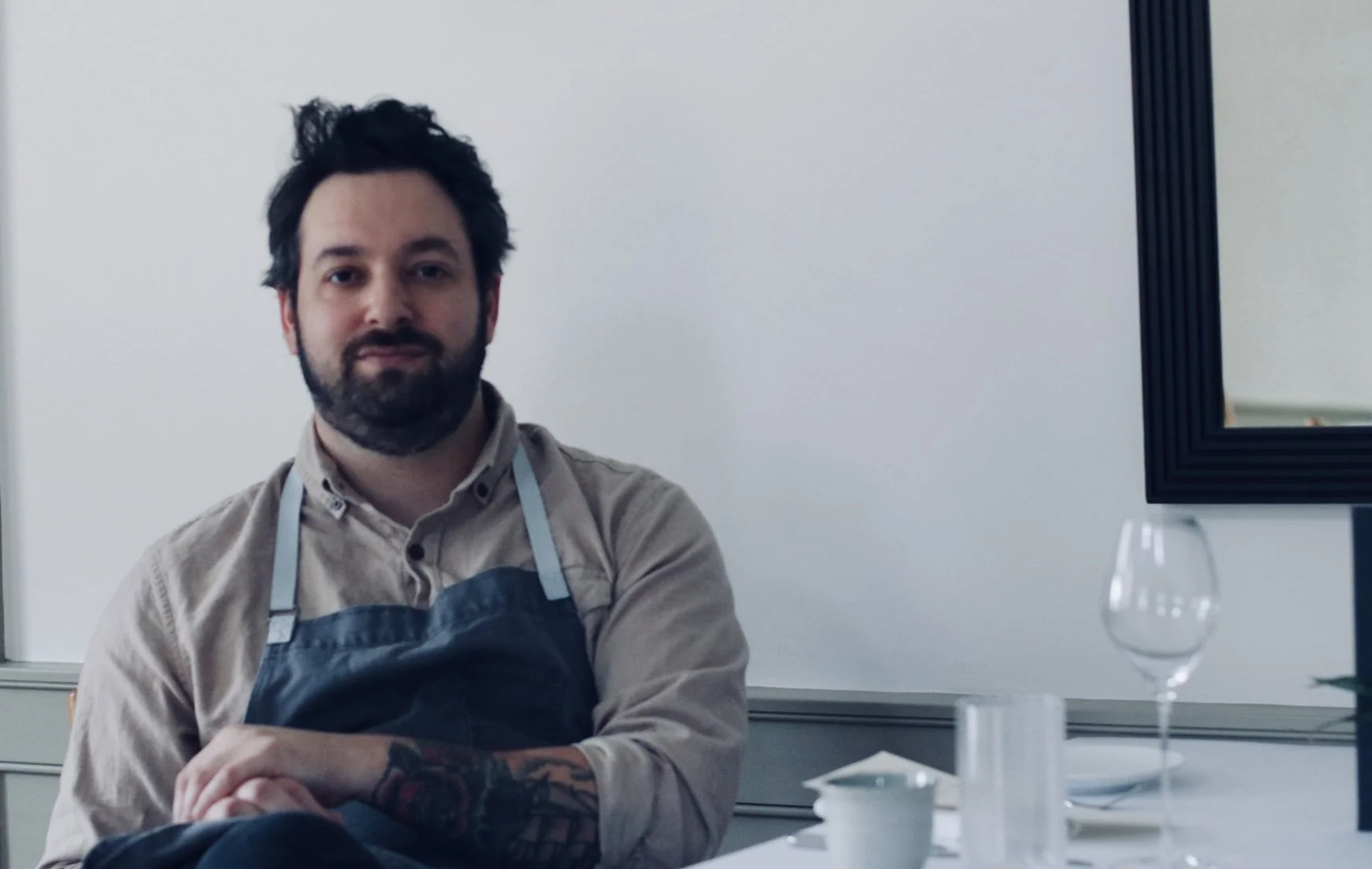
YOU’VE BEEN NOMINATED BY THE CRA FOR ‘CHEF OF THE YEAR’ ALONG WITH ‘RESTAURANT OF THE YEAR.’ CONGRATULATIONS CHEF! WHAT DOES THAT MEAN TO YOU?
It's very cool and I’m very grateful. This is the 2nd year I've been nominated for ‘Chef of the Year’ while last year was a complete surprise because I had just been back in Connecticut for barely a year at that point. Getting nominated again for a 2nd year in a row makes it feel like we're really doing something right.
HOW IS THE TEAM ENJOYING THE RECOGNITION?
I love the team here and the recognition is really good for everyone. They put their heart and soul into everything and I think we have all bought into what we think this restaurant can be and how good we can be as a team. I personally love the fact that we’re creating our own ceiling and always trying to raise it up. These nominations are justification for the work everyone here is putting in and proof it's paying off. People are recognizing it. That's the big thing. It's hard to get noticed out here, which I’m sure you know. As good as Litchfield County is, there aren't a lot of people, or exposure, so you really need to be loud with what you are doing. We’re trying to be super proud of the work we’ve done.
I’VE BEEN A HUGE SWYFT & ORE HILL FAN/ENTHUSIAST SINCE DAY ONE. BACK WHEN SWYFT ORIGINALLY OPENED ORE HILL WAS JUST A VISION, A CONCEPT THAT THEY WANTED TO GET OFF THE GROUND BUT THE ORIGINAL OPENING TEAM NEVER GOT TO SEE IT COME TO FRUITION. TO SEE IT COME ALIVE NOW AS THE CHEF MUST FEEL AMAZING. ANNE BASS, THE BIGGEST PROPONENT OF THIS PLACE AND UNQUESTIONABLY THE BACKER BEHIND ALL OF IT, SADLY PASSED AWAY HOWEVER. IT IS INSPIRING TO SEE IT ALONG WITH HER VISION OF WHAT IS COULD BE STILL LIVE ON, EVEN AFTER HER PASSING? WHAT DOES THAT SAY TO YOU ABOUT THE COMMITMENT OF ORE HILL AND WHERE YOU SEE IT GOING?
I feel like our vision and the story that we tell is just getting better and better with every service. It's becoming more clear, and I think it shows in the way that we present the meal. We start the meal with bread and butter, both of which are made here in house. We use exclusively the dairy from the cows at Rock Cobble Farm. The tie to Rock Cobble Farm, particularly with what they provide to this place, is a wonderful partnership. All the plants on each table and all the plants in this room are grown in the greenhouses there for us. When we start burning firewood in the winter, the firewood is coming from the farm, the firewood for our pizza is coming from the farm. This beef tartare bite that we start the meal with is beef from our Randall cattle. We're trying to hone in and focus the story of our relationship with the farm, and other farms in the area. With that comes this beautiful hyper locality and hyper seasonality.
SO YOU MUST BE CHANGING THE MENU OFTEN THEN? HOW DOES THAT WORK WITH THE SHORTER GROWING SEASON IN THE NORTHEAST AS COMPARED TO OTHER PARTS OF COUNTRY?
Yes, absolutely. We’re changing the menu often. We are doing a ton of preservation because one thing that we've talked about over the years is trying to be a true farm to table restaurant, 12 months out of the year. Not just 6. It’s hard, it's really hard. The key is preservation. You only have five, maybe 6 months a year to really grow and get produce. We are lucky enough to have priority at Rock Cobble Farm, and we've built great relationships with other farmers in the area. I’ll get a call saying “I have extra stuff, can you take some of this off my hands?” Now the challenge becomes for us to try and find ways to preserve everything, and treat the produce with care so that later on in the year we're able to use it and minimize waste. It’s the farmers that are really dictating what we do. We get to be the creative side of it, but they're telling me “hey, I have a bunch of this, I have some of that, but that doesn't look that good, can you figure out something fun to do with it?”. I'm always game to take on something like that to challenge myself and my team. The challenge helps my creative side immensely. I'm not the chef that's like, ‘I need a perfect sized carrot that looks a certain way. These farmers are busting their asses, you know, all the time, they're working really hard. I want the fruits of their labor to shine, just as much as myself and my team busting their asses in the kitchen here each day.
HOW ARE YOU AND YOUR TEAM ABLE TO CONVEY THIS TO YOUR GUESTS EACH NIGHT?
I think all of that is woven into the story that we tell throughout the meal. I like to touch every table. For example, at the end of the savory courses I come out and present the cheese course, showcasing three cheeses that we make at Rock Cobble farm. I talk about how the cheese is made from the same dairy the butter is made from, a call back to the start of the meal. Table-side descriptions like this are a nice touch, they reiterate that special relationship that we have not just with Rock Cobble Farm, but all the local farmers we depend on. Our guests respond well to the narrative, and they really seem to enjoy what we're doing. That response is what I need, because I love cooking and conducting service that way. Everyone I talk to seems to genuinely love this style of dining and are happy to see it thriving.
WHAT ARE SOME OF THE BIGGEST CHALLENGES YOU FACE AS A CHEF TODAY?ARE THEY SPECIFIC TO BEING IN CONNECTICUT OR JUST IN GENERAL, AND WHICH CHALLENGES HAVE CHANGED IN THE LAST DECADE OR SO THAT YOU HAVE NOTICED PARTICULARLY?
Challenges have absolutely changed. I've changed locations a couple times and spent most of my career in big cities. I absolutely love Chicago and I spent a lot of time there, but I have a really tight family and I grew up in Connecticut. My whole family is in New Haven County for the most part, and that was kind of the reason to come back from Chicago. I missed my family- I missed the birthdays and holidays. I really love Chicago, and I’d probably still be there if my family didn't play such a huge role in my life and my partner's life. We're really happy to be back in Connecticut.
That being said, this part of Connecticut definitely brings its challenges, the most obvious is a staffing thing. Staff is hard to come by and I know everyone feels that. Staffing is tough! We have a lot of great people that work for us because we've been here for a long time, we're fortunate. I think we have a really good environment, and a good team. We have a similar vision of what we want to accomplish and how we want to get there. That mentality, especially in the kitchen, is important. We have a lot of fun, but we also came here to get better every single day, in every single thing that we do. We're always trying to improve on the day before. It goes for everyone too, not just the people that work on the line. It applies to us in the back house but also the people who are touching the tables, the people who are clearing the tables, the people who are washing dishes in the back, everyone plays a vital role in the overall guest experience.
This mentality is key, it’s a talk that we have with new employees when they come in on day one. It’s a conversation starting with “hey, we want to have a lot of fun because restaurants should be fun. Cooking is fun. People come to restaurants to have a good time. We want to have a good time while we're here, too. But, this job is really hard.” It’s a lot of hours, it’s stressful. You have to have love at this stage, at this level, and a willingness to labor. It has to be in you. So we need to have fun, but we also need to focus on the fact that this is something that takes discipline, and it takes a lot of drive and you need to come in with a plan. You need to come in with the idea “I need to work on this today. I need to have this ready to go today.” You need to have your prep list tight. You need to have your station tight and function at a high level. If you get that down, you’re going to have a lot more fun.
HOW DO YOU DEFINE THE TERM CHEF? AND WHAT ARE SOME OF THE ATTRIBUTES THAT YOU FEEL MAKE A GREAT ONE? WHAT HAS BEEN THE MOST CHALLENGING PART FOR YOU?
Oh boy. I tell my managers, my CDC and my sous chefs all the time, that the cooking part is easy. The cooking part is the part that anyone can do. I can teach somebody how to cook, to season well, how to properly treat a piece of meat or a piece of fish. It takes time, it takes love, and takes attention, but you can teach that. That's not the hardest thing to figure out.
Dealing with people is the hardest part about this job. As a younger chef, before actually getting into the restaurant industry, when I was in culinary school there was a point where I kind of was like, ‘do I want to front of house, or do I want to do back of house?’ I had always worked in restaurants since I was a kid, and then I kept skipping class while in college at Northeastern for political science so that I could cook for my friends at my dorm. Somewhere in that I was like, yes, this is what I want to do- I want to throw a party. At some point I remember having that fork in the road moment and wondering to myself “hey, my front of house classes at school, I like and have thrived in…. So do I want to go front of house?
And then I thought oh, no, I don't really want to deal with people all that often…that’s too much.” But, you get further in your career and you move up, and you realize managing people is actually unavoidable. The biggest part of my job is dealing with people. Even though it's not necessarily always guest facing, I try to force myself to be guest facing by going out and touching tables, actually talking to people about food we’re serving. I really enjoy talking to people about the restaurant. Turns out I enjoy putting a face to the name, making more of a connection.
We put a lot of love and care into what we do, so being a chef is being a leader. Leading a team, but also being part of that team, being a team player, and finding ways to connect with the people that you work with. You're not always gonna get along with people. You're not always going to see eye to eye. You're not always going to have the same interests. But you have to find ways to speak a common language. To have a mutual respect that you need in order to grow. 90% of my day is making sure that everyone else is good, and everyone feels like they're supported. If one station goes down, we all go down. We need to hold each other up and support each other. We are a team first.
That was hard to grasp early on. When I was a younger executive chef or just running a kitchen when I was a CDC, I could put the creative stuff together. I was always pretty good at putting that stuff together, but the way that I managed teams wasn't fully thought out or fully realized. I wasn't able to do both well, to balance management and creativity. Now, I'm more confident in both of those areas, and I think that kind of shows with the attention the food gets and the consistency the restaurant has.
WHAT WOULD YOU TELL YOURSELF ON THE DAY YOU DECIDED TO BECOME A CHEF, KNOWING WHAT YOU KNOW NOW FROM THE EXPERIENCES YOU’VE GAINED?
Oh wow, that’s hard. My young self. There is a chunk of my brain that's like, go back to school and get a regular degree. Then there is another chunk of my brain that's like, be tough, and tough it out. It's hard to look back and have regrets because there are so many choices that I made that probably weren’t the right ones at the time, but I wouldn't be where I am now without making those choices. There were places that I worked at that I took a lot of shit in, and I would go cry in the walk-in and and just try to figure out how to keep going. Luckily, those hard times pushed me through, and got me to the next level. It’s hard. This is a really hard industry.
It’s a tough job, from the bottom up. You have to push through, and you have to have a thick skin. I know it's not easy, and I guess the one thing I would say is just keep your head down, keep cooking, keep going because it's either you push through or you get out of the industry. There's not really much else, at least in my experience. That's how I see my career. There were definitely many choices and many points in my career where that question came up. “Am I getting out now? Am I gonna go do something else? Find another career path, or am I gonna push through?” And I think every time I chose to push through it, it worked out, and it was worth it. I'm really happy with it.
HAVE YOU VISITED ANY OF THE OTHER RESTAURANTS, OR CHEFS THAT ARE NOMINATED IN THE SAME CATEGORY AS YOU, OR EVEN JUST IN GENERAL IN CONNECTICUT? HOW DO YOU FEEL ABOUT THE RESTAURANT AND CULINARY COMMUNITY SO FAR IN CONNECTICUT?
Well obviously, it's a small state. Definitely different from Chicago or New York, but definitely a lot of restaurants, a lot of great restaurants. They're just more spread out.
I've been excited by everybody I've met in this community, within the CT restaurant industry, so far. It’s been great. I wouldn't have expected anything less either. Going from Chicago to New York was a huge change for myself and my partner, but an easier transition because we had the restaurant industry. I think the restaurant industry kind of translates well to a lot of different places. Restaurant people are very similar, no matter where you are geographically. In restaurants, there are a lot of artists, musicians, people who really care about creativity, and people who like to work hard. These are the people that thrive in the restaurant industry, and I’ve formed a lot of great relationships. Sadly I haven't had the opportunity to eat at any of the other places that are nominated for Litchfield County, and I haven't eaten any of the spots for the best chef category either, yet. It’s absolutely something I would like to do, and need to do. A lot of restaurants are closed on the same days that we are though- everyone needs their time off. Of course I wish I could sneak out on a Thursday, Friday, Saturday to eat! That would be nice. I’d imagine I’m not the only chef that feels that way!